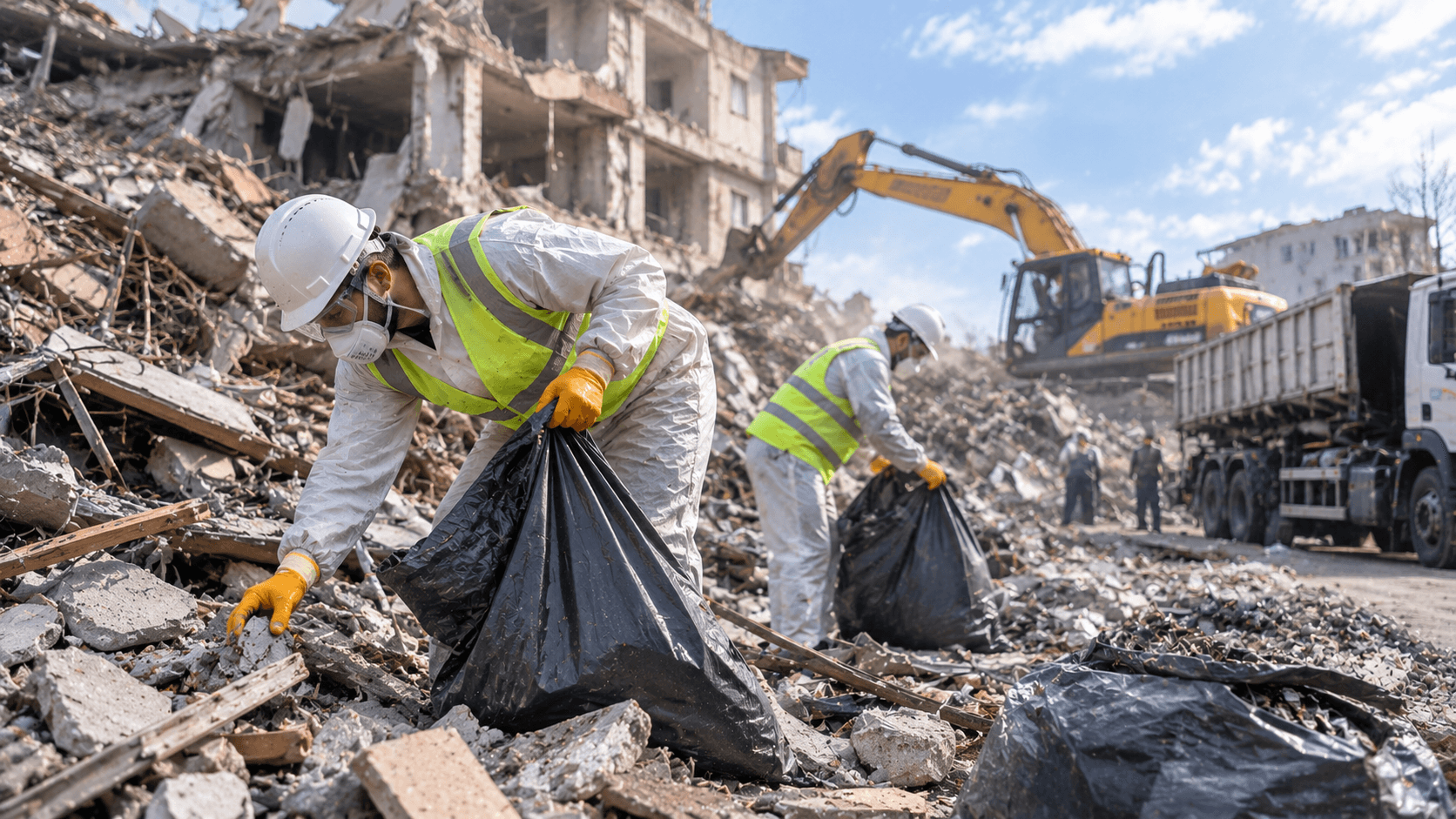
In the aftermath of a disaster, not only are scars left behind, but also mountains of waste. Concrete, bricks, steel, wood, and glass from collapsed buildings, along with mud and debris carried by floods and landslides, quickly become a burden on cities and the natural environment.
If these wastes are left unmanaged, they can contaminate soil, water, and air, posing serious risks to human health. However, when managed properly, some of these materials can be given a new life.
How Do We Approach It?
We Separate. We separate recoverable materials from other waste streams and collect hazardous and potentially harmful substances separately from all other materials.
We Recover and Reuse. Materials such as concrete, metal, wood, and glass can be reused, helping to conserve natural resources while reducing the amount of waste sent to landfills.
We Protect People and the Environment. We prevent waste from harming water resources, soil, and air, and ensure that hazardous materials are handled safely by specialized teams.
We Dispose of Waste Responsibly. Waste that cannot be recovered is disposed of in a controlled manner in accordance with applicable regulations.
Everyone Has a Role to Play
Post-disaster cleanup is not solely the responsibility of public authorities. Avoiding the disposal of waste in riverbeds or vacant land, following instructions from relevant authorities, and reporting suspicious materials to the appropriate departments without touching them are small but effective steps that each of us can take.
Thinking About the Future While Rebuilding
Proper disaster waste management is more than just a cleanup operation. It means protecting the environment, using resources wisely, and rebuilding living spaces on stronger foundations.
Let us remember: Protecting the environment during post-disaster reconstruction means protecting our future.
